The Island, Harry Potter, & Midi-Chlorians: Walking the Narrative Tightrope with Lost
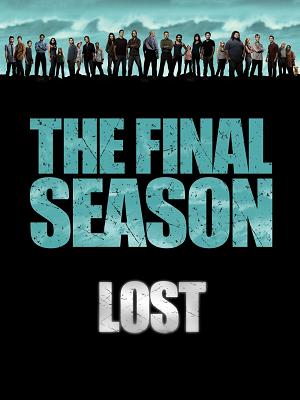 | | Just in case you didn't know |
Having recently spent some time reading comments on forums from various ends of the Internet about my favorite television show (ABC's Lost), it amazes me how many fans are upset at the perceived lack of answers in this, the final season. The show is a mystery show, built upon layers and layers of deep mythology and utter strangeness, and many people are hoping that, in the end, the story makes sense. I want this, too, but the difference between me and a large number of people on these forums is that I am not worried about whether or not this will be the case. As a storyteller, I know that, in any good mystery, you save the biggest answers for the very end. Additionally, you never set out to explain everything, because once you do that, you stop telling a story and start giving a dissertation.
The writers of Lost understand this dynamic. From the very beginning, they've been interested in exploring the characters first and addressing the mythology second, and to this day, they have not changed their tune in that regard. In 2004, before the pilot episode even aired, Damon Lindelof said:
It's not a TV show about what is that thing in the jungle. It becomes more about the monsters in each other as opposed to the monsters out there, and some of the secrets are much darker than others. People have been there (on the island). There is a transmission that is being transmitted in French, from somewhere on the island, repeating on a loop for 16 years and this keys into this idea, asking the audience, what do YOU think this is? Where might it be? Who might have left it? Why did they come here in the first place? Are they still here? Are they stranded? What is the content of that message? The word 'mythology' is used alongside a show like The X-Files which is built on the mythology that his Mulder's sister is abducted and that is the beginning of his obsession with extra terrestrials and his search for the answers and every couple of weeks they would service that mythology but eventually that was all the show was about anymore. [SOURCE]
Not only did they understand the pitfall exemplified by The X-Files, in which the mythology took over and eventually ruined the show, they also understood what happens when you ignore the mythology completely. Using The Prisoner and Twin Peaks as examples, Lindelof and J.J. Abrams have both said that they never intended to create a show that would end without a satisfactory explanation. Since the beginning, the show's producers and writers have sworn up and down that they had an overall, season-by-season plan for the show's mythological arcs, despite the at times deafening skepticism. (There is some evidence to support this skepticism, as when the head writers once promised that there would never be time travel in the show.)
 | | These people wanted answers, too |
I, for one, believe them, because when I look back at other epic mystery stories, I see a pattern. Take the Harry Potter book series, for example. There are seven books, each self-contained enough to be a separate story but also intertwined enough to present an overall mythological mystery. Leading up to the release of the seventh and final book, Harry Potter and the Deathly Hallows, fans (including this one) wrote out lists of questions they hoped would be answered by the final story.
If you read the last book with an eye for nothing but these answers, though, you will get very impatient with the first two-thirds or so of the novel. The beginning is filled with new mysteries that serve the individual story of the seventh book, such as the mysteries of Dumbledore's past, the deathly hallows themselves, Grindlewald, and much else, seeming to forsake all of the greater questions that many fans wanted answered as quickly as possible. However, the last thirty pages or so are chock full of information and big answers, and most fans, when they were finished, felt satisfied.
If you apply this pattern to Lost, you wouldn't expect to get any of the big answers until the final handful of episodes. You'd even expect that this, the final season, would have its own share of mysteries and complexities, as indeed it does. Anybody who feels disappointed that the show hasn't delivered the big answers yet needs to suck it up, because it'll probably be at least another month before they will find any real satisfaction.
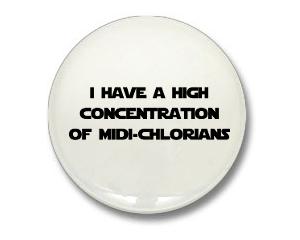 | | Just doesn't have the same ring as "The Force is strong with this one" |
I'm not trying to argue that the show will end perfectly. I fully expect that there will be big questions left unanswered, but I also expect that many of the show's major mysteries will be explained enough. And even though the writers have been mostly successful in walking the narrative tightrope thus far, there is no reason to assume they will make it to the end without falling off. Indeed, when it comes to mysteries as big and complex as Lost, the ending is probably the most difficult part for any writer to face.
And it is certainly possible to explain too much. It is true that The X-Files is a good show to discuss when talking about how character should always supercede mythology, but when talking about overexplaining a mystery, a better example would be Star Wars. Note that I am a defender of the new trilogy, but one place where George Lucas failed was in his unnecessary explanation of the Force. Star Wars isn't built upon mystery the way Lost, The X-Files, or Harry Potter is, but midi-chlorians, the tiny symbiotic lifeforms that are responsible for the Force, are a great example of why you shouldn't try to explain everything. Answers can be unsatisfactory and mundane, and therefore far less satisfying than leaving the mystery unexplained.
Also, there is a never-ending pattern to answers that should be addressed. Anybody who's tried to explain something to a two-year-old who just learned the word "why" knows what I'm talking about. Every answer presents more potential questions, and it becomes impossible to explain everything without drawing a line in the sand.
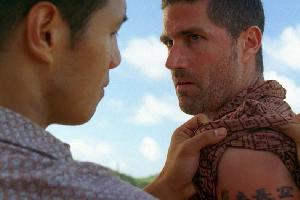 | | But what do they really mean? |
You don't even have to go that far to show this. Within the canon of Lost episodes is "Stranger in a Strange Land," an episode considered by most fans to be the absolute worst the show has to offer. Up until this point in the show, there were many mysteries built upon the characters' pasts, like how Locke wound up in a wheelchair or what Kate did to become a fugitive. We had come to expect each episode's requisite flashbacks to address these mysteries in one way or another. In "Stranger in a strange Land," the flashbacks explained why Jack, a spinal surgeon, had tattoos all over his arm. While this was a question people wanted answered, they realized by the end of the episode that it was a completely meaningless mystery in the big scheme of things. Granted, you could take it further if you really wanted to and demand that the writers explain why Jack went to Phuket (where he got the tattos) in the first place, but most fans are content with leaving that an open question. Indeed, it probably would have been better if the tattoos went unexplained as well.
Other characters have unexplained pieces of their past, too, like Sawyer's "Tampa Job" and whatever happened to Sayid in Basrah, and I certainly hope they don't waste time showing these things to us. While the characters are more important than the mythology, there is little, if anything, the writers could show us about these characters' pasts that would change what we know about them now. We don't need to know the entire life story of each character in order to understand what's happening on the island, and we really don't want to have that much secondary information thrown at us.
It is too soon to say how satisfying the end of Lost will be, but it is also too soon to be as worried about it as many fans seem to be. I know I'm guilty of making lists of questions I want answered, but I know a lot of these minor mysteries will by necessity remain unanswered after the final credits roll and that this is probably for the best. Besides, they've got to give us something to talk about when it's all over. If they don't, the show will not become the legendary television landmark we fans know it should be.
-e. magill 4/13/2010
|
|