O.J., Gates, Gosselins, and Iraq: Being Skeptical about Current Events
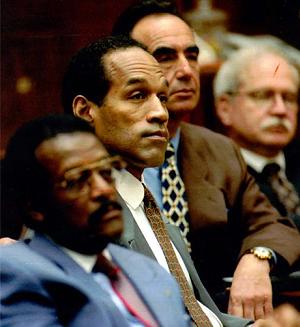 | | You are fairly likely to have your own baggage when looking at this picture |
I was in high school during the O.J. Simpson trial, and despite my best efforts to ignore the news, I found myself fascinated by the event. It wasn't so much the trial itself--or even the media circus that surrounded it--that intrigued me. It was the fact that everybody seemed to have an opinion on whether O.J. was guilty or not. Across the entire country were millions of people who had made up their minds about what happened, despite the fact that very few of them were directly connected to the case, personally knew the principle players, or had any involvement whatsoever in the events of the night Nicole Brown Simpson and Ronald Goldman died. One of my classmates was convinced that O.J. was set up by racist cops, and my mother, an avid reader of pulp mystery novels, refused to believe that the most likely suspect could be the killer. Most people, though, were firm in their opinion that O.J. had to have done it, and when he was found not guilty, it was evidence of a broken legal system. It occurred to me then that people tend to make several assumptions about all manner of things, and if you could take an unbiased look at your own assumptions, you could probably learn a hell of a lot about yourself.
Take, for example, last week's big news story involving the arrest of Henry Gates, Jr. Like the O.J. case, this story struck a nerve across the country, has provoked strong opinions from all manner of people, and has a racial overtone that is difficult to ignore. Since I typically save my thoughts on racism in America for my annual rant during Black History Month, I'm not going to focus here on the racial divide (besides, other writers seem to have that angle covered). What concerns me, rather, is how quick we all are to form an opinion based on multiple chains of heresay.
From what we can tell, the facts are these: a neighbor of Professor Gates saw a man attempting to break into Gates' home and called the police. The police arrived on the scene, and the principal officer, Sgt. James Crowley, arrested Gates for disorderly conduct. The charges were dropped shortly thereafter, but the story had already started exploding across the AP wire. Apparently, Gates had broken in to his own home due to a jammed lock, and when police arrived to question him, he became belligerent. Many, including President Obama, believe that Gates was treated unfairly due to the fact that his skin is black and Sgt. Crowley's is not. Others think Sgt. Crowley behaved appropriately and was only reacting to Gates' uncooperativeness. I, personally, don't have a belief concerning the arrest itself, because I am able to admit that I don't have all the facts.
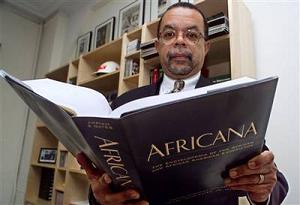 | | Henry Gates: racist, victim of racism, or somewhere inbetween? |
Is it possible that those who assume the police acted stupidly have stereotyped race relations in America? Is it also possible that those who assume Gates was as belligerent as Crowley contends have made assumptions about the behavior of black people? Absolutely, but it's more than just racism. You could, for example, simply hate cops or college professors.
People who are quick to form conclusions about current events based on very little evidence have an excess of bias, and it doesn't just extend to issues of racism or legal matters.
Another big story in current events today, the Jon and Kate Gosselin divorce, can reveal a lot about a person. For those who aren't familiar with this particular bit of fluff, all you need to know is that Jon and Kate have eight children, their own reality television show, and a shiny new divorce settlement. The tabloid press have run with this drama and come up with predictable levels of dirt on both parties. People who care about such things have strong feelings and a need to take sides. People who tend to believe that all men are pigs tend to side with Kate, while people who tend to think that all women are evil tend to side with Jon.
The desire to make strong pronouncements about current events can be found all along the spectrum, from frivolous to deathly serious.
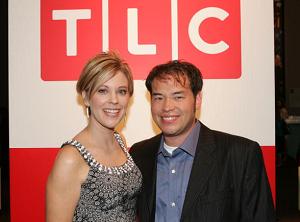 | | Jon and Kate: Scumbag and psycho, victims of the limelight, or normal human beings? |
Take the Iraq War, for example. How many "No Blood for Oil" protesters have actually bothered to check how much oil we have taken from Iraq? How many people who think we did no wrong by invading have bothered to go over there and see how appreciated we are? Should we take the government's word for these kinds of things? Of course not, but we also need to recognize the deficiencies in common knowledge. Matters this grave and important are especially difficult, because it seems nobody is in possession of all the facts. But one thing is for sure; people who believe war is rarely justified are more likely to blindly believe possible conspiracy theories involving President Bush's plan to invade Iraq, while people who believe war is an unfortunate necessity tend to take a more trusting view. This doesn't even take into account political bias, which is a ridiculously powerful force in modern America.
We can even be biased about bias! Despite the fact that each and every one of us is, in some way, biased, we tend to treat people who reveal their bias as untrustworthy. People who think Fox News or CNN are politically slanted don't think these outlets can possibly get anything right. Similarly, a non-Christian is unlikely to trust anything a Catholic priest has to say about homosexuality, just as an orthodox Christian is unlikely to blindly accept the opinion of an athiest on the matter. As soon as somebody admits to having a belief that is political, social, or religious in nature, we tend to look at that person through a filter that can be either positive or negative.
 | | In one way or another, we're all arrogant assholes from time to time |
This phenomenon allows you to make judgements about people you don't know, and I've even come across it on this blog. Last week, in the comments for my article about taking my 6-month-old son to a Harry Potter movie (found on Open Salon, one of the secondary places I post), dozens of people who've never met me or my son informed me that, because they believe that parents tend to overlook their children's flaws, I was absolutely wrong in telling them that my son is more well-behaved than most babies. People who have actually met my baby agree with my assessment of my son's behavior, but there is no way for me to convince a stranger of this without any evidence greater than my word. It's hard for me not to feel insulted by this, but it's a perfectly normal phenomenon, and one we probably couldn't survive without.
If we were unable to make assumptions about life, we'd have a hard time functioning. Of course, this doesn't justify treating O.J. Simpson like a murderer or a victim, calling Sgt. Crowley a racist or Professor Gates a reactionary, proclaiming Jon Gosslin a typical chauvanist dog or his ex-wife a cold-hearted bitch, saying that there were no shades of grey involved in the invasion of Iraq, or implying that I am incapable of seeing reality when it comes to my child. We have to be vigilant and careful when it comes to interpreting events around us. If we aren't, we risk becoming arrogant bigots, racists, sexists, and assholes.
Next time you see a story about someone or something you don't know, remember that you are not in possession of all the facts. If you make assumptions, know that they probably reveal more about yourself than you'd care to admit, and if you must jump to conclusions, always allow for the possibility that there is evidence you're not privy to that can change your mind.
-e. magill 07/27/2009
|
|